The Dwarf Mini Smart Telescope
A small, relatively affordable instrument that can find and stack deep-sky objects from a light-polluted garden. First images and early impressions.
Around forty years ago I built a Newtonian reflector from scratch. The optics were sound enough; the equatorial mount I constructed from plans was not. Polar alignment was a real pain. I enjoyed building the scope, but I was under no illusion that I was getting the best from the instrument.
The DWARF mini is a different kind of proposition.
It fits in a coat pocket. It connects to a phone, plate-solves its own alignment, chooses from a catalogue of targets, and then stacks exposures autonomously while you go inside. No polar alignment. No star-hopping. No manual tracking corrections.
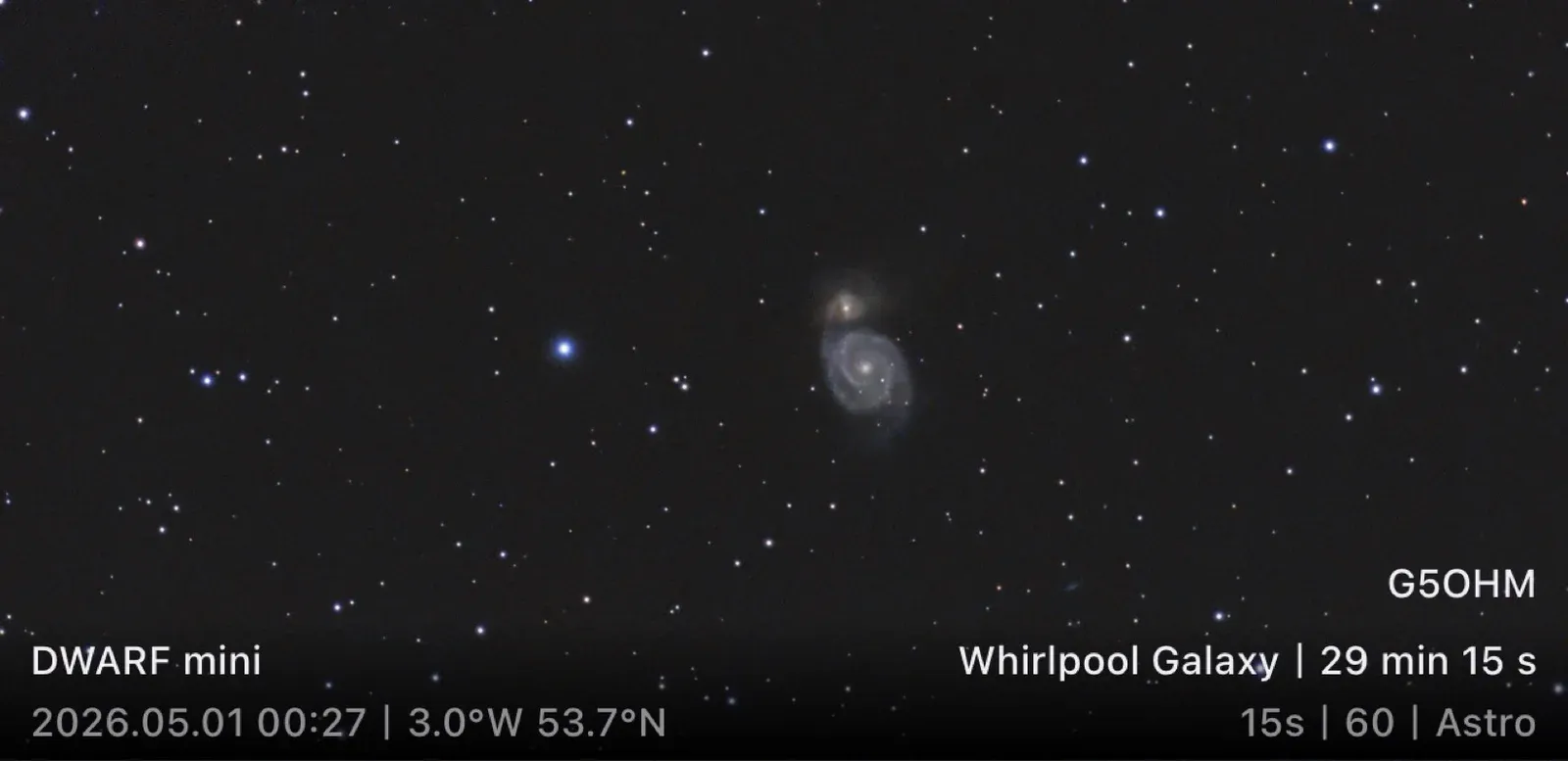
What it produces from a suburban garden in the north of England, at 53.7°N and Bortle 5 skies, requires some honest qualification before the images say anything. The aperture is 24 mm. There is no software trick that replaces the light-gathering you do not have. The physics are what they are.
Then I looked more carefully at what it had actually collected.
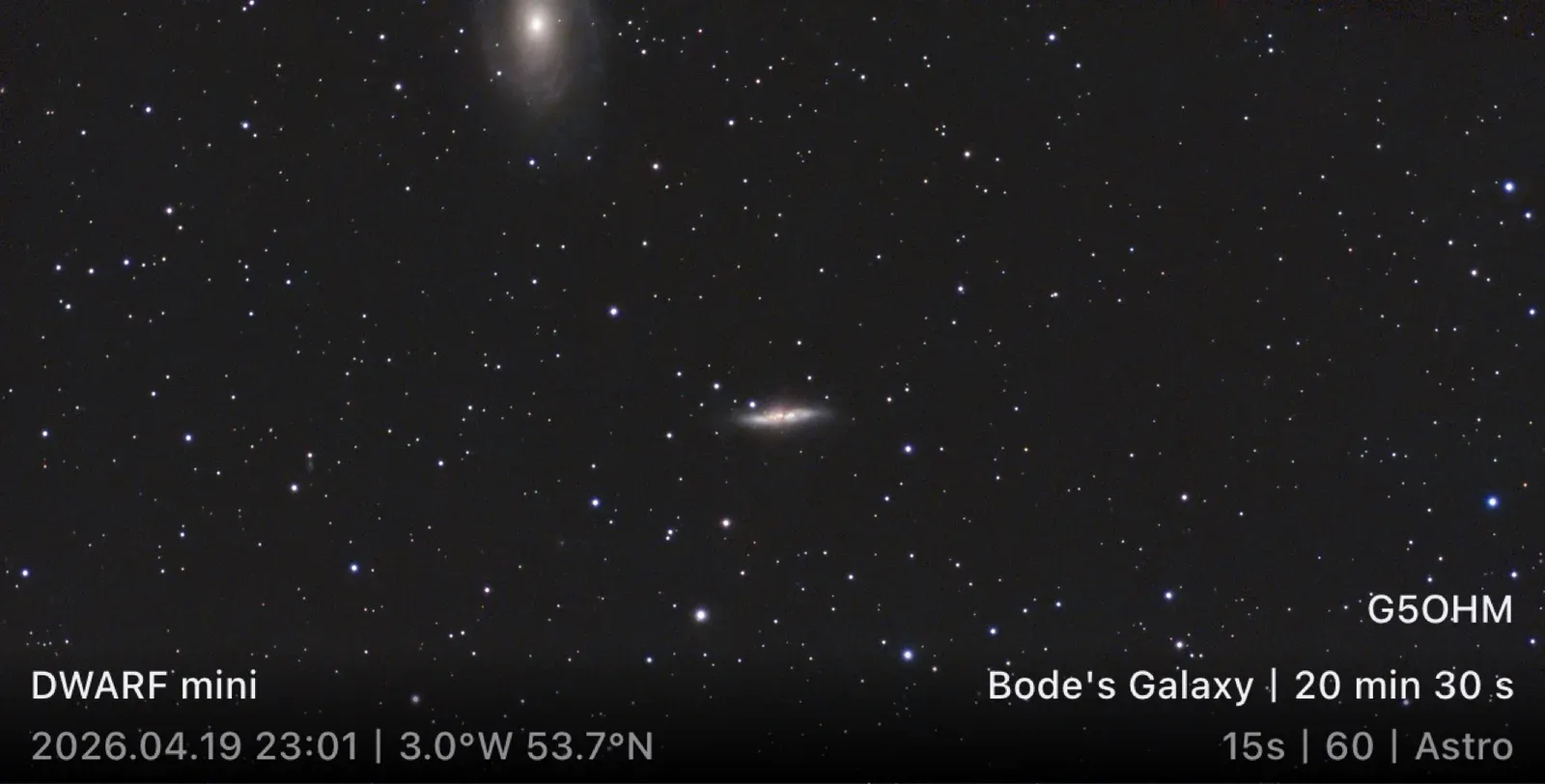
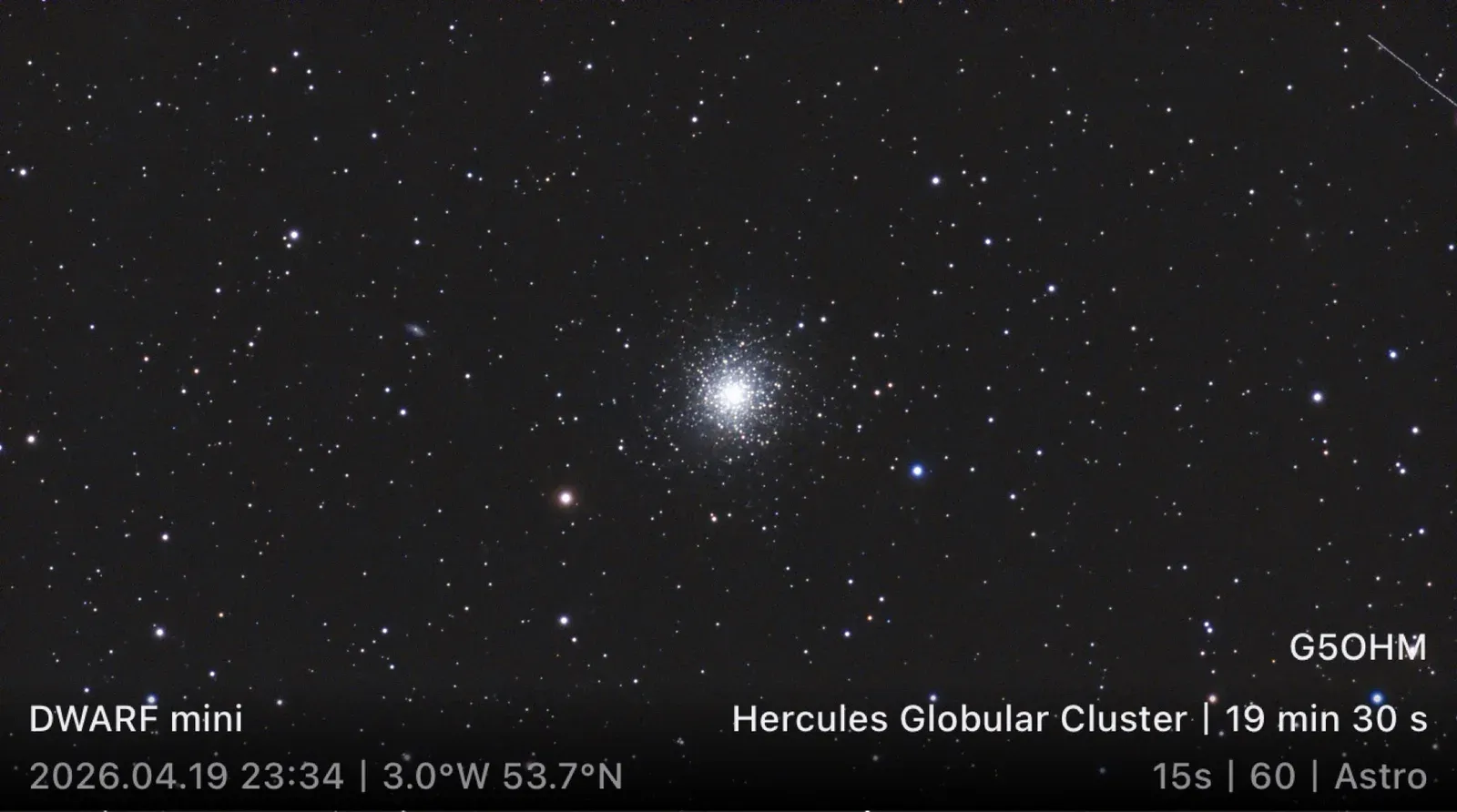
Bode’s Galaxy (M81) and its companion M82, the Cigar Galaxy, appear in the same field of view after 20 minutes of stacking. The Hercules Globular Cluster (M13) resolves individual stars at its edges after 19 minutes. These are not large aperture results; they are honest results from a 24 mm lens, tracked accurately and stacked patiently.
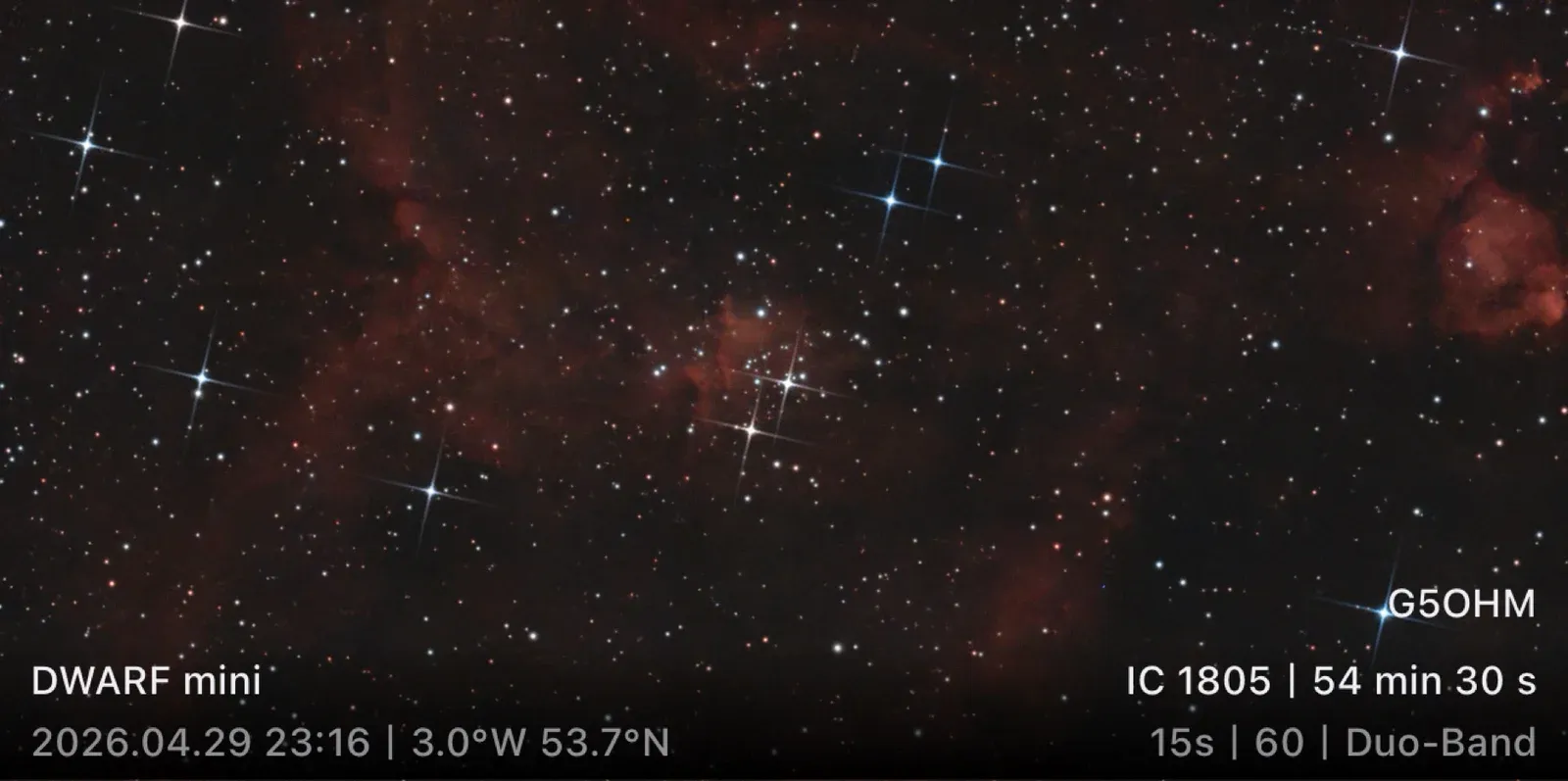
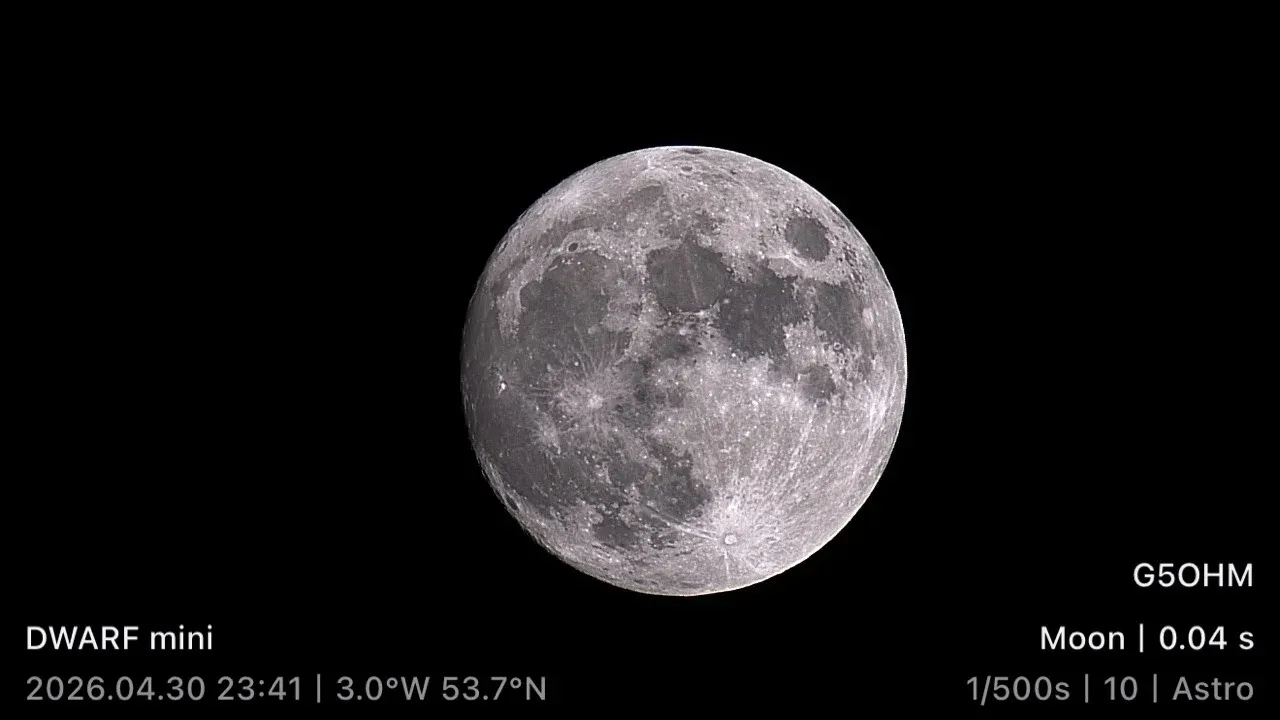
The Heart Nebula (IC 1805) needed a Duo-Band filter to pull anything useful through the light pollution; 54 minutes of frames at 15 seconds each. The red hydrogen-alpha structure is unmistakable. The Moon, by contrast, needed no stacking at all: 0.04 seconds, craters sharp to the naked eye on the screen.
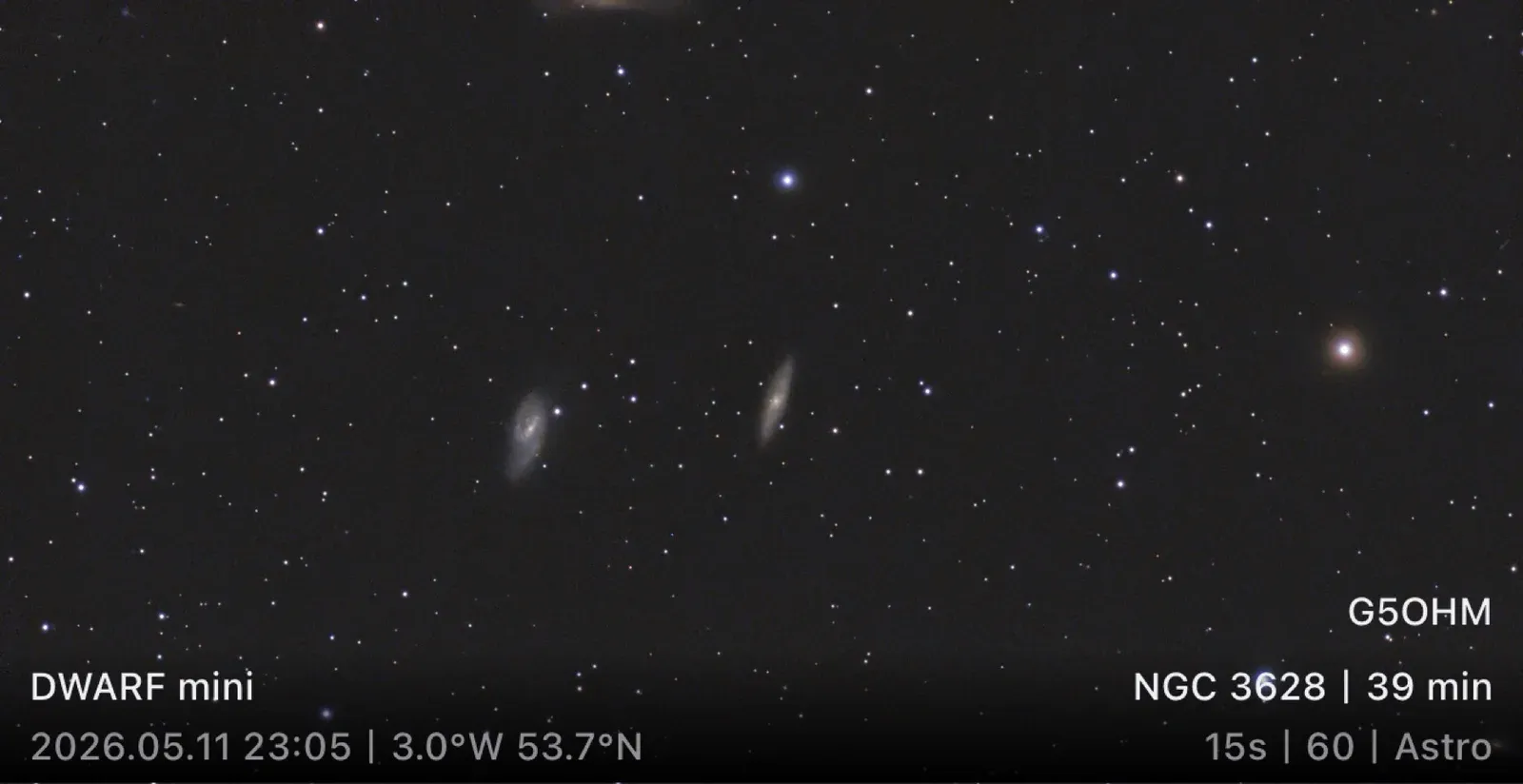
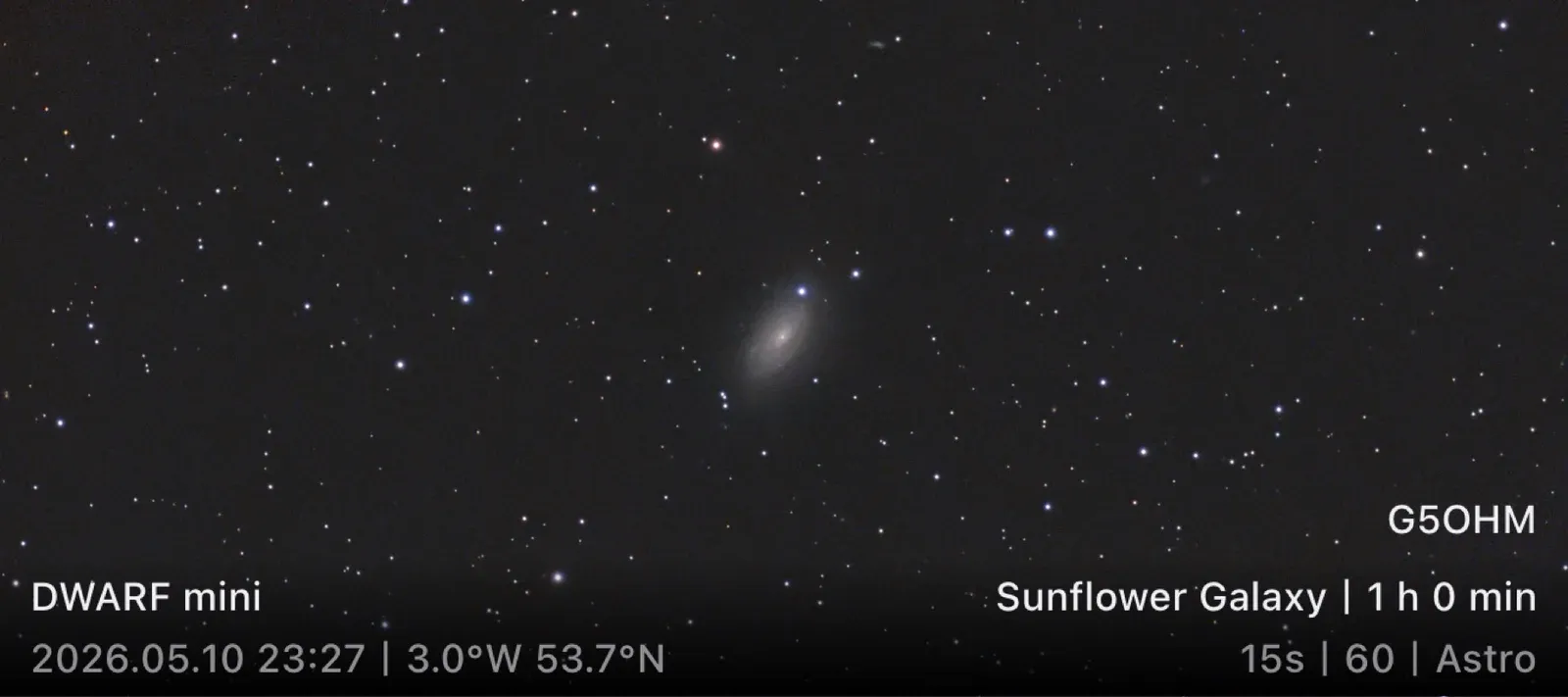
The constraint the instrument cannot overcome is aperture. What it can do is track accurately, stack patiently, and make the whole process accessible enough that you actually use it on a Tuesday evening in April. The telescope I built four decades ago sat unused on many clear nights because setting it up properly was itself an hour’s work before the first photon was collected. This one is on target in ten minutes.
None of this competes with the internet. A search returns the same galaxies rendered by instruments with apertures measured in metres, from sites chosen for their darkness, processed by people who do this professionally. I make no claim against that. But those are someone else’s photons. These are mine, and gathering them taught me things no download could: how a target drifts across the field, when a filter earns its place, how much patience a faint object actually costs. The point was never to own the best image of M51; it was to stand in the garden and watch one arrive.
Whether a shorter path to the sky changes the quality of attention you bring to it, I cannot yet say. The images are records of real photons from real objects, collected on real clear nights from a garden in the north of England.
It is still a remarkable thing.
The observations from this instrument now have a log of their own: Cloud Permitting, where each night’s images sit with the conditions that produced them.